Connection to landscape
To celebrate the release of my new book, The Psychology of Spaces: 10 ways the design of your home can impact your wellbeing, I will be blogging excerpts. This is to give you a taste of what is to come in the full edition.

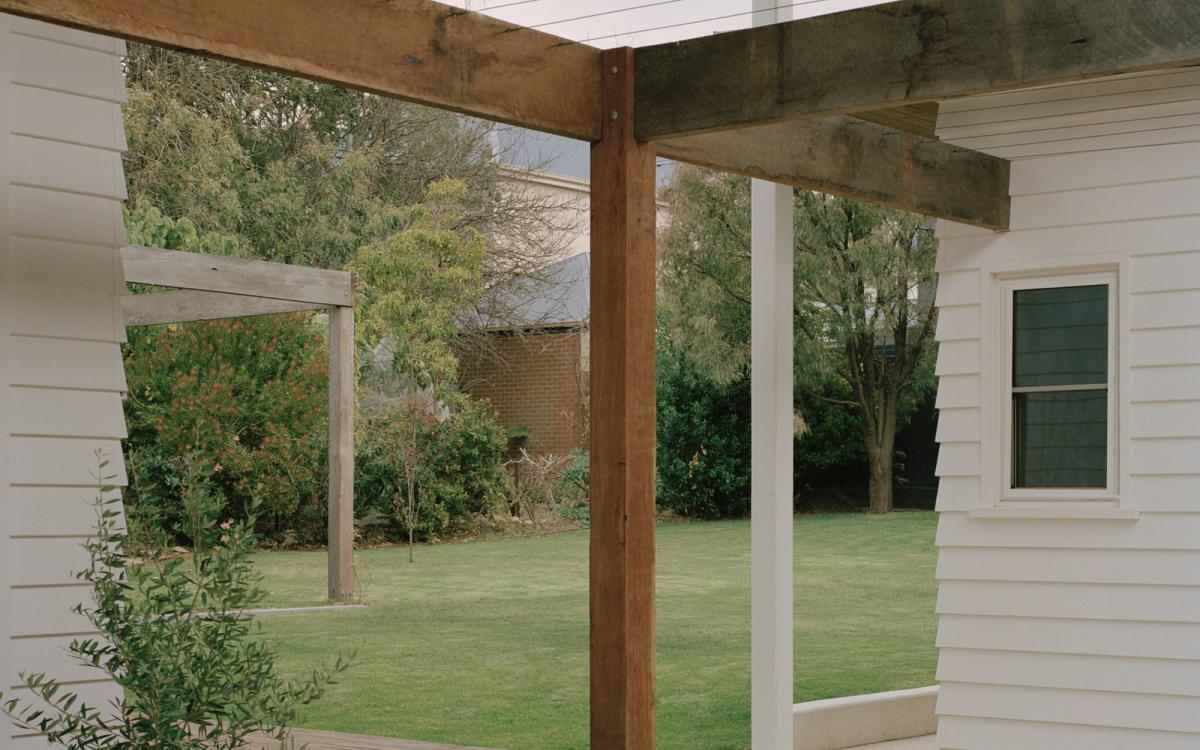
How the best room in the house isn’t in the house
An Architect that I admired and was lucky enough to work directly with early in my design career, Jonothan Cowle, had a saying, “Trees are better than buildings, and people are better than trees.” It’s a saying that took me a moment to understand the meaning of.
My interpretation is around two things: what to prioritise, and how buildings, trees and people can impact the final space. Essentially, if you can build less and allow landscape to take over, that’s better. Furthermore, if you can make a space for people to occupy and enjoy with minimal intervention, that’s even better again.
One thing I commonly hear early in a project is the desired size of a home. This makes perfect sense, because I’m designing the home, right? I provide the drawings, and the builder constructs the walls, roof, floors and windows. But what I’m also designing is what not to build, The space between. The zones you create between buildings have as much of an impact on the final product as the zones that the builder will actually build.
Architecture & music
The space between reminds me of an analogy in music. I spent many years of my life playing live music as a drummer in a variety of bands. I was lucky enough that music allowed me to travel around Australia a few times and even travel and perform internationally. While the bands I was in never “made it,” I was very serious about my instrument and learning as much as possible.
French composer Claude Debussy has a famous quote that reads, “Music is the space between the notes.” The rhythm that is created by a musical composition is not only the notes that you decide to play, but also the space between them.
It is similar in an architectural composition. Choosing what to build and what not to build have equal weight and impact on the final result. Building too much and not allowing the landscape enough space will have a major negative impact on how the building feels.
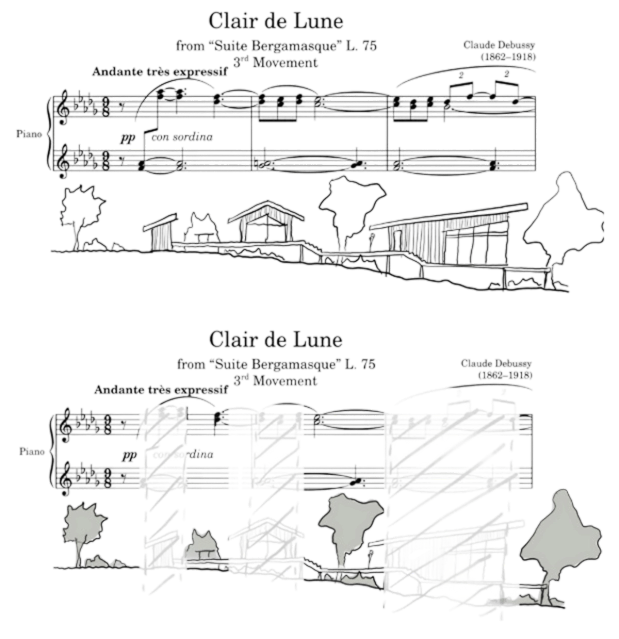
I’ve drawn the below diagram to help illustrate this, comparing one of Debussy’s musical works, Clair de Lune, to an architectural composition diagram. The musical notes are the beats that are actually played. In architecture, the buildings that are actually built. The space between the notes creates the rhythm and the breathing space, or in architecture, the opportunity for landscape, natural light and ventilation to take prominence.

Thanks for reading. If you want to read more, the full book is available now here.
If you want to talk architecture, reach out to me via my contact page here.
All the best,
Matthew Walton